
An Attempt at Compiling a Memory+Compute Fusion Thematic Index – A Dual-Track Framework
Most AI investors talk about “compute” as if it were the whole story: GPUs, accelerators, chips, cores. But every one of those cores needs somewhere to read from and write to. Memory and storage define how wide the data highway really is. In practice, AI performance is a fusion of compute and memory, not a solo act. So why do so many indices and ETFs separate them into different silos—one for semiconductors, one for memory, one for data centers—when the actual workloads keep blending them?

This blog takes a flexible stab at a solution: a Memory+Compute Fusion theoretical index
Why Fusion? Compute Alone Is An Incomplete Story
Historically, market indices have given center stage to compute: CPU makers, GPU vendors, general semiconductor giants. Memory and storage, when they appear, are often treated as separate, cyclical subsectors. That separation made sense when AI was marginal. Today, it is more problematic.
Modern AI workloads tell a different tale:
- Training large models is limited by how quickly data can be moved into and out of memory.
- Inference at scale depends on memory bandwidth and latency as much as raw FLOPS.
- Storage architectures for AI blend fast NAND, persistent memory, and networked fabrics into the compute plane itself.
A fusion index acknowledges that compute and memory live together. It tries to answer questions like: How do we weight companies whose business models straddle GPU and HBM? What do we do with cloud platforms where capex is dominated by both accelerators and storage backbones? A dual track framework is one way to structure those answers.
The Dual Track Idea: Two Axes, One Index
At the heart of the fusion approach is a simple idea: instead of treating memory and compute as separate universes, we treat them as two axes. Each company in the index gets a compute score and a memory score, and the fusion index weight is derived from both. It is dual track in the sense that we keep the tracks distinct in the calculation, but combine them in the final exposure.
In very high-level terms:
- Track A – Compute axis: GPU and accelerator designers, CPU vendors, general-purpose semiconductor firms, AI-specific ASIC makers.
- Track B – Memory axis: DRAM and HBM manufacturers, NAND and SSD vendors, storage systems providers, persistent memory innovators.
- Fusion layer – Combined index: Weights that blend the two axes based on each constituent’s footprint across both dimensions.
The goal is not to force symmetry—compute and memory can have different total weights—but to make sure both tracks are visible and mathematically present in the index, rather than memory being treated as an “add-on.”
Step 1: Defining the Universe
Any index begins with a universe. For a Memory+Compute Fusion index, the universe could be defined by a simple thematic rule: companies whose business meaningfully contributes to AI storage and computing power. Within that universe, we would classify names along two overlapping tracks:
- Pure compute names: GPU, CPU, AI accelerator designers and manufacturers.
- Pure memory/storage names: DRAM, HBM, NAND, SSD, enterprise storage, storage fabrics.
- Hybrid names: Cloud platforms, foundries, data center operators, or OEMs whose revenue depends on both compute and memory configurations.
This classification is intentionally loose. The framework must tolerate overlap because real companies rarely live on a single track. A hyperscaler might be 40% “compute,” 40% “storage,” 20% “other.” A monolithic GPU vendor might creep into the memory track as it co-designs HBM packages. The universe sets the boundaries; the dual track scoring begins to shape the details.
Step 2: Compute Track Scoring
The compute track is the more familiar axis. We might assign a compute intensity score to each company based on a mix of indicators. For example:
- Revenue share from compute hardware and AI accelerators.
- Capex devoted to compute capacity and design.
- Market positioning as primary compute provider (for instance, dominant GPU brand).
For practical purposes, we could normalize compute scores on a scale, such as 0 to 1, where 1 represents a company that is almost entirely compute-centric. A GPU-focused semiconductor firm would sit near 1; a pure storage company might be closer to 0 on this axis. Hybrid names would occupy the middle.
This scoring doesn’t have to be perfectly precise to be useful. The point is to capture, in a disciplined way, how much of each company’s profile arises from compute power rather than other business segments.
Step 3: Memory Track Scoring
The memory track parallels the compute track but emphasizes a different set of signals. A memory intensity score might consider:
- Revenue share from DRAM, HBM, NAND, SSDs, and storage systems.
- R&D and capex focused on memory technologies, packaging, and storage-class innovations.
- Market share in key memory segments that feed AI workloads (server DRAM, HBM-on-package, high-end SSD for data centers).
Again, we normalize memory scores between 0 and 1, where 1 represents a pure memory/storage player. DRAM manufacturers would score near 1; a cloud software provider might be near 0 on memory, even if it uses memory heavily in operations. Cloud platforms might receive middle-range scores if they are building proprietary storage architectures or owning data center hardware outright.
The dual track framework thus gives each company two coordinates: (compute score, memory score). The fusion index is built in this two-dimensional space.
Step 4: Weighting – Combining the Tracks
Once we have scores, we need a weighting scheme. There is no single “correct” formula, but a flexible approach might look like this:
- Start with base weights derived from traditional index rules (for example, market-cap weighting, modified by liquidity thresholds).
- Apply a fusion multiplier that depends on both compute and memory scores. For instance:
- Fusion factor = α × compute score + β × memory score, where α and β reflect how much we want each track to matter.
- Final weight = base weight × fusion factor, subject to caps to avoid extreme concentration.
If we set α ≈ β, we treat compute and memory as equally important drivers of the AI infrastructure theme. If we believe the current cycle is memory-constrained, we might emphasize memory with β > α for a period. The dual track allows for these tilts while still keeping both axes present.
Hybrid names—companies with medium scores on both tracks—can emerge as “fusion anchors” in the index, while pure players provide sharper exposure to each side. The result is an index that genuinely blends compute and memory instead of leaning heavily into one.
Step 5: Segment Views – Sub-Indices Within the Fusion
One advantage of a dual track framework is that it naturally supports sub-indices. Within the fusion index, we can define subsets:
- Compute-heavy fusion segment: Names with high compute scores and at least moderate memory scores.
- Memory-heavy fusion segment: Names with high memory scores and at least moderate compute linkages.
- Balanced fusion segment: Companies with reasonably similar moderate scores on both axes.
These segments can underpin specialized ETFs or derivative overlays. Investors who want more memory emphasis can tilt toward the memory-heavy slice; those who want more generic AI compute exposure, but still recognize memory’s role, can favor the compute-heavy slice. The dual track framework keeps all of this within one theoretical index family.
Applications in ETF and Derivative Design
A computed fusion index is interesting on paper; it becomes more relevant when tied to actual products. The dual track framework opens several design possibilities:
- Fusion core ETF: A flagship thematic ETF tracking the full index, offering integrated exposure to memory + compute for AI storage and power.
- Fusion compute ETF: A sub-ETF tracking the compute-heavy segment while still respecting fusion weights, capturing companies whose product economics rely heavily on memory even if they’re labeled “compute.”
- Fusion memory ETF: A complementary fund focused on memory-heavy holdings that remain structurally tied to compute deployments.
- Index derivatives: Futures and options on the fusion index, as well as spread products between the compute and memory sub-indices, enabling investors to trade the relative performance of the two tracks directly.
In practice, a portfolio manager could use the fusion core ETF as a baseline and apply derivatives to express tactical views—overweight memory in tight cycles, tilt toward compute when new architectures reduce memory pressure, or balance both when the stack feels synchronized.
Dynamic Track Adjustments – Letting the Framework Breathe
AI hardware is not static. The line between compute and memory keeps shifting: compute moves closer to memory, HBM merges with GPU packages, and storage fabrics blur into distributed compute networks. A dual track framework must be dynamic enough to keep up.
Several adjustment mechanisms can maintain flexibility:
- Periodic rescore: Re-evaluate compute and memory scores regularly (for example, quarterly) based on updated revenue and product data.
- Track tilt rules: Allow α and β to change within predefined ranges as the cycle evolves, so the index can naturally emphasize the segment that is truly driving AI infrastructure returns at a given time.
- Entry/exit rules for hybrid names: Update classifications as companies pivot—for instance, a former GPU-only firm that begins co-designing memory packages may move into a more balanced fusion role.
This adaptability transforms the index from a snapshot into a living framework. The dual track remains, but the coordinates and multipliers shift as the AI landscape evolves, keeping the fusion concept aligned with reality rather than locked into a static historical view.
Managing Concentration and Cyclicality
Fusion does not eliminate the standard challenges of thematic indices: concentration risk and cyclicality. In fact, because memory and compute segments can both be oligopolistic and cyclical, a fusion index must deliberately manage these issues.
There are several tools:
- Weight caps: Limit the maximum weight any single constituent can command, even if it scores highly on both tracks and has a large market cap.
- Segment caps: Prevent the index from becoming excessively compute- or memory-heavy by capping total weight allocated to each axis.
- Cyclical awareness: Recognize that both memory and compute experience boom–bust patterns. The fusion index can incorporate macro signals, like price cycles or capex trends, to adjust tilts without abandoning its thematic core.
These controls keep the fusion index from becoming merely “a handful of mega-caps with a story.” They help preserve the idea of dual exposure—memory + compute—while making the index more robust for long-term investment use.
Interpretive Layer: Not Just Numbers, But Narrative
A dual track theoretical index is more than a numerical exercise. It invites a richer narrative. When investors look at the fusion weights, they can see how the AI stack is changing:
- If memory-heavy scores rise, it may reflect that AI workloads are hitting bandwidth and capacity limits.
- If compute-heavy weights dominate, it might indicate a phase where new architectures or accelerators are the primary growth engine.
- If balanced fusion names gain ground, we may be entering an era where integrated solutions—vertically co-designed compute + memory + interconnect—are favored.
This interpretive layer is part of the value. A fusion index is not just a benchmark; it is a lens that reveals where the AI storage and computing power theme is truly alive at any moment. Investors can use that lens to inform their decisions, even if they never buy the ETF tracking the index.
Who Might Use a Fusion Index?
Different types of investors could find different uses for a Memory+Compute Fusion index:
- Thematic allocators: Those constructing AI-focused portfolios who want infrastructure exposure that reflects both chips and memory, without over-committing to one side.
- Risk managers: Investors worried about overexposure to a single AI segment might use the fusion index as a benchmark for balanced infrastructure risk.
- Derivative traders: Those interested in relative-value trades between compute and memory segments can use the dual track structure for more precise, structured positions.
- Corporate strategists: Company-level decision-makers can look at how their firm scores on each track to understand how the market might view their role in the AI stack.
The theoretical nature of the index doesn’t prevent it from being useful. Even as a thought experiment, it can guide how we think about exposure and convergence between memory and compute.
Limitations: Where the Framework Must Stay Humble
Any attempt at computing such an index should come with humility. Several limitations are inherent:
- Data granularity: Public data on revenue and capex breakdowns between compute and memory can be coarse and inconsistent.
- Boundary fuzziness: As compute moves closer to memory, the distinction between the tracks can blur, making scoring more art than science.
- Model risk: Choosing α, β, and scoring algorithms introduces model biases; different choices may yield different index compositions.
Recognizing these limitations is important. The dual track framework should be treated as a directional tool rather than a precise instrument. It helps structure thinking around AI storage and computing power, but it should not be mistaken for an oracle.
Closing Thoughts: Fusion As a Way of Seeing
The Memory+Compute Fusion theoretical index, built on a dual track framework, is ultimately a way of seeing. It reflects the reality that AI is no longer “compute versus memory,” but “compute with memory,” where performance and value emerge from their combined architecture. By giving each company a place in a two-dimensional space—one track for compute, one for memory—and blending them into a single index, we make that reality visible in a form that investors, ETF designers and risk managers can work with.
The index is theoretical, the framework experimental, and the math only one part of the story. What matters more is the mental shift: treating memory as equal partner to compute in AI infrastructure, and designing financial structures—indices, ETFs, derivatives—that embody that partnership. If we get that shift right, even imperfect fusion indices can bring us closer to portfolios that truly reflect how AI systems are built and how they will evolve.
You May Like

Narrowing Spread Between NAND Spot and Contract Prices in 2026 – A Signal
By 2026, one of the most watched metrics in the NAND flash market has started to shift in a subtle but meaningful way: the spread between spot prices and long‑term contract prices is narrowing. For casual observers, this may look like just another incremental change in a notoriously volatile industry. For memory makers, module houses, device OEMs, and data center buyers, however, a tightening gap between spot and contract prices is a signal—a reflection of evolving supply–demand balance, risk perceptions, and strategic behavior on both sides of the market.

Price Divergence Trading Strategies Between NAND Flash and DRAM ETFs
NAND flash and DRAM sit at the core of AI storage and computing power. Both are memory, but they are not the same business. DRAM is main memory—fast, volatile, and central to high‑bandwidth workloads like AI training and inference. NAND is non‑volatile storage—slower than DRAM, but crucial to persistent data and large‑scale object storage. The cycles that drive their pricing and margins overlap, yet they often diverge. That divergence is where trading strategies between NAND and DRAM ETFs become interesting.

China’s HBM Localization Progress: The Catch-Up Pace of CXMT and XMC
China’s drive to localize advanced memory technologies has accelerated over the past several years. High-Bandwidth Memory (HBM) sits near the center of that strategy because it is integral to AI accelerators, high-performance computing (HPC) and other strategic compute platforms. Two domestic players—ChangXin Memory Technologies (CXMT) and XMC (Xianghui Memory, commonly referred to as XMC)—have become focal points in assessing how quickly China can close the gap with international incumbents on HBM die, stacking, and packaging.

Thermal Simulation Challenges and Solutions in 3DIC AI Chip Design
As AI workloads push chips to deliver ever higher compute density, designers are increasingly turning to three‑dimensional integration (3DIC) to stack dies vertically and pack more functionality into limited footprints. While 3DIC architectures unlock significant performance and bandwidth advantages, they also introduce complex thermal behaviors that are far harder to predict and manage than in traditional 2D layouts.
An Attempt at Compiling a Memory+Compute Fusion Thematic Index – A Dual-Track Framework
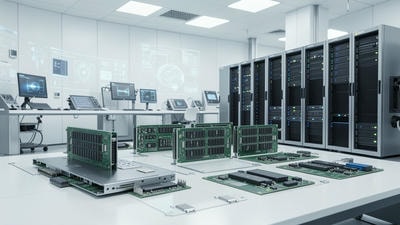
Most AI investors talk about “compute” as if it were the whole story: GPUs, accelerators, chips, cores. But every one of those cores needs somewhere to read from and write to. Memory and storage define how wide the data highway really is. In practice, AI performance is a fusion of compute and memory, not a solo act. So why do so many indices and ETFs separate them into different silos—one for semiconductors, one for memory, one for data centers—when the actual workloads keep blending them?

Surging Demand for Laser Drilling and Plasma Dicing Equipment in Advanced Packaging
Advanced packaging has become one of the semiconductor industry’s most important growth engines, and it is now pulling a surprising set of process tools into the spotlight. Among the most in-demand are laser drilling and plasma dicing equipment. These machines sit close to the heart of heterogeneous integration, fan-out packaging, wafer thinning, TSV formation, glass substrate processing, and other advanced flows where precision, yield, and throughput matter enormously. As packaging moves from a back-end afterthought to a strategic platform, the equipment used to shape, open, and separate materials has become just as important as the dies themselves.
D2D Interface Bandwidth and Latency Comparison in Chiplet Architectures
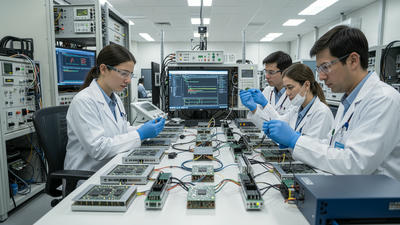
Chiplet architecture has turned the package into a real performance battleground. Once multiple dies are placed side by side or stacked within the same advanced package, the quality of the die-to-die, or D2D, interface becomes one of the most important determinants of system behavior. Bandwidth is no longer a nice-to-have metric, and latency is no longer a small implementation detail. Together, they shape whether a chiplet system feels nearly monolithic or frustratingly fragmented.

Stock Selection Logic and Alpha Validation of ESG-Themed Semi ETFs
Semiconductor themed ETFs are no longer just about growth and cycles. A growing subset now layers environmental, social, and governance (ESG) criteria on top of traditional sector exposure. These ESG semi ETFs promise two things at once: access to one of the market’s most powerful secular themes, and alignment with sustainability and governance standards. The pitch is appealing, but it raises two hard questions. First, how exactly are these stocks being selected? Second, does the ESG overlay help, hurt, or leave alpha unchanged?